

1-3 SEPTEMBER 2027
BANGKOK INTERNATIONAL TRADE & EXHIBITION CENTRE, THAILAND
#APCS
1-3 SEPTEMBER 2027
BANGKOK INTERNATIONAL TRADE & EXHIBITION CENTRE, THAILAND
South-East coatings market and industry looks ahead to sustainable growth
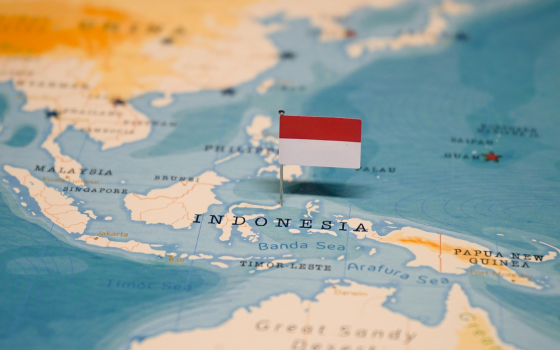
Southeast Asia’s paint and coatings industry is benefiting from growth in Indonesia, where sustained housing construction, infrastructure investment, urbanisation and rising demand for environmentally responsible products are reinforcing its position as Southeast Asia's largest coatings market.
The US-based market research company IMARC Group estimates that the Southeast Asian paints and coatings market was worth USD 7.3 billion in 2025 and is projected to reach USD 11.5 billion by 2034, with residential demand driven by aesthetic and environmental protection needs being a key growth driver (1).
With a population exceeding 280 million (out of the Association of Southeast Asian Nations (ASEAN) bloc population of 700 million) and continued economic expansion, Indonesia - the region’s largest market - is a key destination for coatings manufacturers, raw material suppliers and technology providers seeking long-term growth.
Indonesia’s importance to the regional coatings industry will be highlighted when Jakarta hosts the Asia Pacific Coatings Show from 26-28 August 2026 at the Jakarta International Expo (JIExpo). The exhibition will bring together manufacturers, formulators, raw material suppliers, distributors and service providers from across the Asia-Pacific region (2).
According to Indonesia's Ministry of Industry, the country's paint industry had an installed production capacity of approximately 1.5 million tonnes per year in 2025, serving domestic demand of more than 1 million tonnes annually and supporting around 36,000 jobs (3).
Market research firms expect Indonesia’s demand to continue rising over the coming decade, reflecting projected GDP growth of 5% in 2026 (International Monetary Fund estimates) (4). IMARC Group estimates Indonesia's architectural coatings market reached USD 1.1 billion in 2025 and will grow to USD 1.5 billion by 2034, a CAGR of 3.65% between 2026 and 2034, driven by construction, urbanisation, rising incomes and sustainability trends.
Mordor Intelligence is more optimistic, forecasting growth from USD 1.79 billion in 2026 to USD 2.11 billion by 2031, supported by housing construction, infrastructure development and waterborne coatings demand (5).
“Indonesia still has significant room for growth,” said Markus Winarto of the Indonesian Paint Companies Association (APCI), noting strong long-term demand prospects.
Per capita paint consumption remains relatively low at around 4–5kg per person annually, roughly half of Malaysia and one-third of Thailand, suggesting further upside as incomes rise and housing standards improve (6).
Regionally, Indonesia is still catching up economically, with World Bank data showing GDP per capita of around USD 4,925 in 2024, compared with USD 7,347 in Thailand and USD 11,874 in Malaysia (7).
Housing construction underpins demand
A key driver of future coatings demand is President Prabowo Subianto's Three Million Homes Programme, aimed at reducing the housing deficit and stimulating construction activity nationwide.
The government allocated IDR 57.7 trillion (USD 3.19 billion) to housing programmes in the 2026 budget, supporting around 770,000 homes through mortgages, renovation support and financing schemes.
This is expected to boost demand for decorative paints, waterproofing systems, roof coatings, sealants and protective coatings used in residential construction.
Mordor Intelligence highlights rising home ownership, middle-class expansion and secondary city development as key structural drivers of architectural coatings demand.
Decorative coatings remain the largest segment. Harryawan of Ascoatindo noted they dominate due to use across housing, commercial buildings and general construction.
Residential applications accounted for around 67.5% of Indonesia’s architectural coatings market in 2025, while waterborne coatings represented over 74% of demand, reflecting the shift towards lower-emission products.
Globally, waterborne systems already account for around half of coatings consumption and continue to gain share through 2031.
Product safety and sustainability gain importance
Regulatory focus on safety, indoor air quality and environmental performance is increasing across the sector.
Emmy Suryandari of Indonesia’s Ministry of Industry emphasised that quality and safety standards are becoming more important as the industry expands (8).
The government is tightening enforcement of lead limits in decorative paints under Indonesian National Standards (SNI) and expanding mandatory conformity requirements for construction materials (9).
There is also a clear shift towards lead-free and low-VOC coatings, supported by industry and regulators. APCI highlights rising demand for environmentally safer formulations.
Manufacturers such as PT Kansai Prakarsa Coatings are expanding lead-free and water-based product portfolios across multiple segments, including decorative and industrial coatings (10).
Executives emphasise that coatings should support safety and quality of life, not just aesthetics, as awareness of indoor environmental health increases.
Infrastructure supports industrial and protective coatings
Infrastructure investment remains a major driver of industrial and protective coatings demand.
Ongoing development of ports, bridges, logistics hubs, manufacturing facilities and energy infrastructure across Indonesia requires corrosion protection and long-term maintenance coatings.
Marine coatings are also important due to Indonesia’s extensive coastline and port expansion projects such as Tanjung Priok and Patimban.
Industry representatives note that domestic manufacturers are improving technical capabilities, although international certification requirements remain a barrier to higher-value segments.
Raw materials and skills remain key challenges
Despite strong demand, Indonesia’s coatings sector remains highly dependent on imports, with around 80% of raw materials sourced directly or indirectly from overseas petrochemical inputs.
APCI highlights concerns over both pricing volatility and supply security. Prolonged disruptions could pose availability risks rather than just cost pressures.
Government efforts to expand domestic chemical production may help reduce dependency over time.
Workforce skills are another key issue. Industry leaders stress that correct application is as important as product quality, with professional training and certification increasingly prioritised to ensure performance outcomes.
Philippines
The Philippines is also experiencing steady coatings market growth, supported by construction and urbanisation. With a population of 117.6 million, its architectural coatings market was valued at USD 296 million in 2024 and is forecast to reach USD 430.85 million by 2032 (11).
The country imported nearly USD 80 million worth of paints and coatings in 2024, mainly from Thailand (12), reflecting strong domestic demand but limited production capacity.
Key growth drivers include real estate development, infrastructure expansion and rising home improvement activity. Challenges include high raw material costs, competition and stricter environmental regulations.
Progress is also being made on sustainability, with several manufacturers recognised for achieving third-party Lead Safe Paint Certification, including Boysen, Davies Paints Philippines and others (13).
Vietnam
Vietnam, with a population of around 102 million, remains one of the region’s fastest-growing markets. GDP growth is forecast at 6.8% in 2026, supporting strong coatings demand.
IMARC Group expects the paints and coatings market to grow from USD 775.8 million in 2025 to USD 1.13 billion by 2034 (14).
Growth is driven by urbanisation, manufacturing expansion, EV production and major infrastructure investment in ports, rail and highways, including 1,721km of new expressways planned by 2030 (15).
Regulatory tightening is also shaping the sector. Vietnam’s Law on Chemicals, effective 2026, introduces stricter approval and monitoring of new chemical substances (16).
Sustainability-focused companies are gaining market share, with AkzoNobel reporting 5% sales growth in Vietnam in 2024, driven by premium and eco-friendly coatings (17).
Thailand
Thailand’s coatings market is supported by rising infrastructure spending, projected to increase from USD 18 billion in 2024 to USD 28 billion by 2050 (18).
Industrial and automotive coatings are also expanding as Thailand develops into a regional EV manufacturing hub, with exports expected to reach 52,000 units in 2026 (19).
Global coatings companies are investing in production capacity, including waterborne automotive coatings facilities to meet sustainability-driven demand (20).
However, manufacturers continue to face pressure from volatile and rising raw material costs.
Malaysia
Malaysia’s coatings sector is benefiting from GDP growth of 4-5% in 2026 and strong construction activity. The construction sector grew 8.5% in Q1 2026 to MYR 46.5 billion (USD 11.4 billion) (21).
The coatings market is forecast to grow at a CAGR of 4.7% between 2026 and 2032, driven by construction, automotive and marine demand (22).
Heat-reflective and energy-efficient coatings are gaining traction in response to climate conditions, with manufacturers promoting products that reduce surface temperatures in buildings.
Singapore
Singapore represents a high-value, mature coatings market supported by advanced construction and strict green-building standards. GDP per capita stands at USD 90,674.
Construction demand in 2026 is expected to remain strong, driven by major infrastructure projects including Changi Terminal 5, Marina Bay Sands expansion and transport upgrades (23).
Total construction output is forecast at SGD 43-46 billion (USD 33.5–35.8 billion), around 7% higher than 2025.
The coatings market is expected to grow steadily at around 4.78%, with strong emphasis on sustainability and low-VOC technologies (24).
Singapore’s steady expansion highlights broader ASEAN resilience, with both mature and emerging markets supporting long-term regional growth in paints and coatings.



Member of





dmg events is a leading organizer of face-to-face events and publisher of information services. Our aim is to create dynamic marketplaces to connect businesses with the right communities to accelerate their growth in today’s rapidly evolving landscape.